
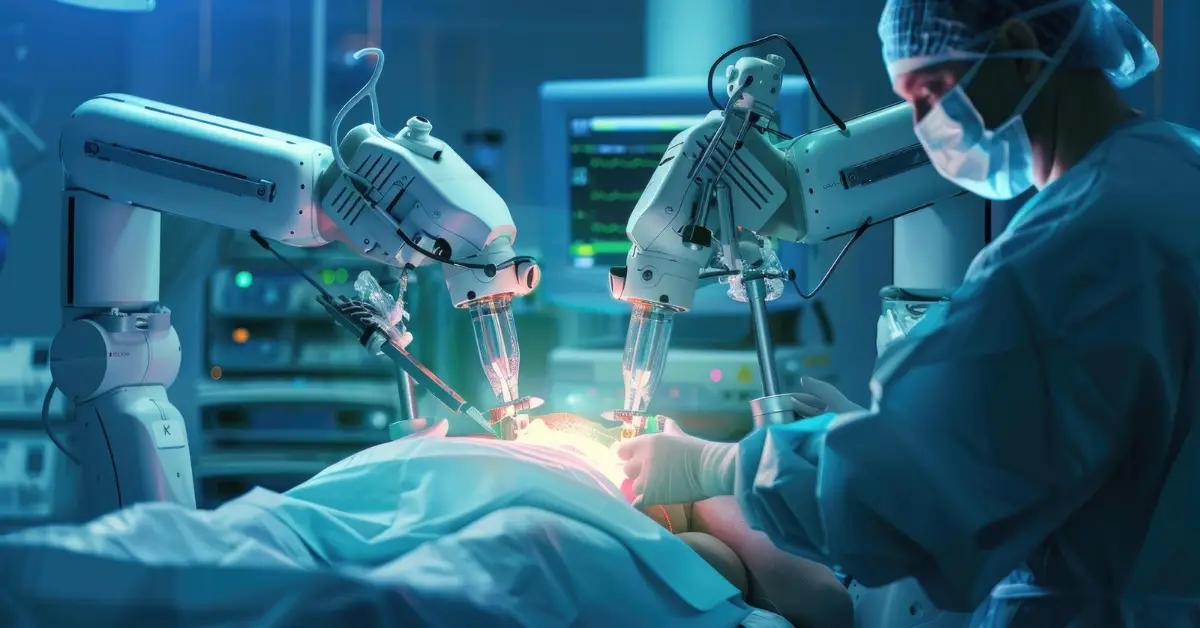
Robotic-Assisted Surgery is transforming modern healthcare by combining advanced robotics with human expertise to deliver unmatched accuracy, control, and consistency. This approach allows surgeons to perform highly delicate procedures through tiny incisions while maintaining exceptional precision. Unlike conventional techniques, it minimizes physical strain on the surgeon and maximizes stability during complex movements. Patients benefit from faster recovery, reduced pain, and improved outcomes. As medical technology evolves, this method is becoming a gold standard across multiple specialties, redefining how surgeries are planned, executed, and experienced—setting a new benchmark for safety, efficiency, and confidence in surgical care.
Robotic systems are designed to eliminate human limitations while amplifying surgical skill. Every movement is intentional, filtered, and optimized.
This level of control leads to safer surgeries and predictable outcomes.
Robotic technology doesn’t replace surgeons—it upgrades them.
In short: more control for surgeons, more comfort for patients.
Robotic systems shine brightest in procedures where precision is non-negotiable.
This makes robotic platforms a game-changer for advanced reconstructive surgeries.
Preparation matters as much as the procedure itself.
Proper preparation ensures smoother surgery and recovery.
Post-operative care is simpler, but still crucial.
Consistency in aftercare directly impacts long-term results.
Robotic-Assisted Surgery represents the future of safe, precise, and patient-focused surgical care. By blending advanced technology with surgeon expertise, it delivers outcomes that were once difficult to achieve with conventional methods. From reduced pain and quicker recovery to improved surgical accuracy, the benefits are clear and measurable. As adoption grows across specialties, this approach continues to set new standards for excellence in healthcare. For patients seeking confidence, comfort, and cutting-edge care, this technique stands as a powerful evolution in modern surgery.
Yes. Robotic systems are designed with multiple safety checks and are fully controlled by trained surgeons. The technology enhances precision and stability, reducing human error. Extensive clinical use across specialties shows consistently high safety and success rates when performed by experienced professionals.
No. The surgeon performs the entire procedure. The robotic system only translates the surgeon’s hand movements into more precise actions. Think of it as a highly advanced tool that improves accuracy, not an independent machine making decisions.
In most cases, yes. Smaller incisions mean less pain, minimal blood loss, and reduced tissue trauma. Patients often experience shorter hospital stays and return to daily activities sooner compared to open or conventional laparoscopic surgeries.
Dr. U. P. Srinivasan provides expert surgical care in gastroenterology and advanced laparoscopic procedures, offering accurate diagnosis, personalized treatment planning, and minimally invasive solutions designed to support faster recovery and long-term digestive wellness.